California DMV Form REG 31 Explained
June 30, 2025
VIN Verification for Salvage Titles in California
June 30, 2025
When you’re preparing for VIN verification at the DMV, understanding potential pitfalls is essential. Inaccurate documentation can easily lead to rejection, as can discrepancies within the VIN itself. Issues related to your vehicle title, unregistered modifications, and inspection failures can complicate matters further. Each of these factors can hinder your progress. So, what steps can you take to avoid these common obstacles?
Inaccurate Documentation

When you’re dealing with VIN verification, inaccurate documentation can complicate the process considerably. It’s essential to guarantee that all documents align with the vehicle’s identity. For instance, mismatched names, incorrect addresses, or typos in the VIN can lead to rejection at the DMV. You’ll want to cross-check registration papers, insurance documents, and titles for consistency. Missing information or ambiguous descriptions can also trigger further scrutiny. To streamline your experience, gather all necessary paperwork beforehand, confirming that every detail matches perfectly. By approaching VIN verification with meticulous attention to documentation, you’ll reduce delays and foster a smoother compliance process. Being proactive in this regard not only aids in innovation but also strengthens your position in maneuvering regulatory requirements effectively. Additionally, remember that unique VIN verification is crucial in preventing fraud and theft.
Discrepancies in the VIN
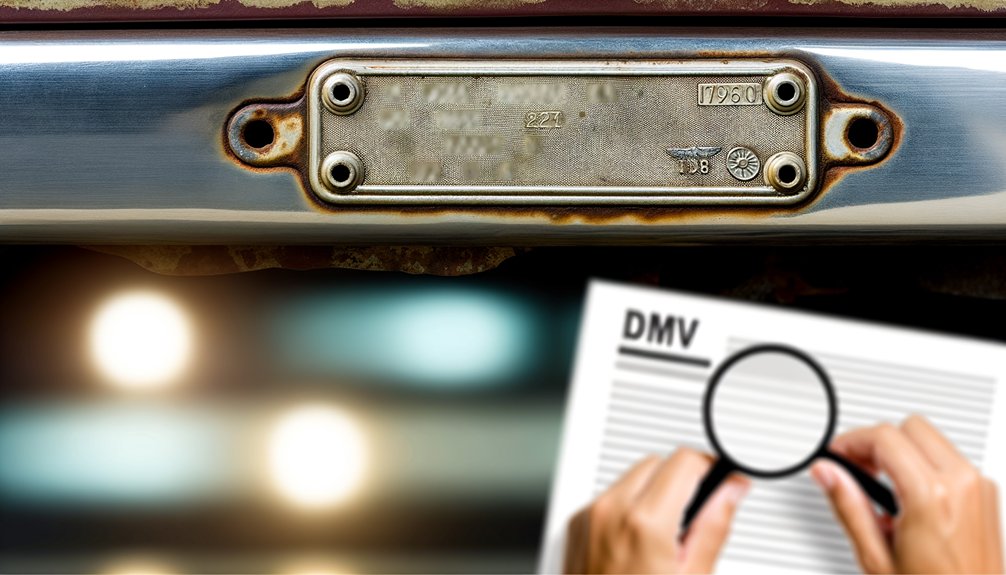
Although discrepancies in the Vehicle Identification Number (VIN) might seem minor, they can considerably hinder the verification process. To guarantee your VIN passes inspection, keep an eye out for the following issues:
- Transposed Characters: Numbers or letters switched can lead to mismatches.
- Omitted Digits: Missing characters can render the VIN unrecognizable.
- Incorrect Format: Each VIN follows a specific structure; deviations can raise red flags.
- Inconsistent Documentation: Confirm all documents match the VIN on the vehicle itself.
Addressing these discrepancies early can save you time and frustration during the verification process. Additionally, ensuring compliance with California Vehicle Code can help prevent potential rejections. By remaining vigilant and proactive, you can navigate the complexities of VIN verification and avoid unnecessary DMV complications.
Issues With Vehicle Title
Issues with your vehicle title can create significant obstacles in the ownership transfer process, so it’s important to address them promptly. Common concerns include missing signatures, incorrect names, or discrepancies between the title and your identification. If the title is branded as salvage or rebuilt, it may raise red flags during verification. Always verify that the title matches the VIN and is free of liens or claims. If you’ve purchased a vehicle from a private seller, confirm that they hold the title legally. Innovations in online title verification tools can expedite this process, but double-checking all details remains vital. By proactively resolving title issues, you can streamline your VIN verification and guarantee a smooth shift of ownership. Additionally, ensure that your vehicle meets California compliance emissions labels to avoid further complications during registration.
Unregistered Modifications
Unregistered modifications to your vehicle can complicate the VIN verification process and may lead to legal repercussions. When you modify your vehicle without proper registration, you risk encountering issues during verification. Consider these common unregistered modifications:
- Engine swaps – Changing the original engine can confuse the VIN and lead to discrepancies.
- Body alterations – Significant changes in the body structure might not align with the original VIN specifications.
- Suspension upgrades – Modifications here can affect vehicle height and weight, complicating assessments.
- Aftermarket parts – Installing unregistered aftermarket components can raise questions about compliance with safety regulations.
To avoid setbacks, verify all modifications are approved and documented to facilitate a smoother VIN verification process. Additionally, ensure that your vehicle meets California emission standards to avoid further complications during the verification process.
Failure to Meet Inspection Requirements
When you fail to meet inspection requirements, you jeopardize your vehicle’s ability to pass the VIN verification process. Each state has specific criteria, often including emissions tests, safety checks, and equipment functionality. If your vehicle doesn’t comply, the DMV might reject your VIN verification application. It’s vital to conduct a thorough pre-inspection on essential components like brakes, lights, and exhaust systems. Additionally, guarantee all required documentation is in order, as any discrepancies can lead to further complications. By proactively addressing these inspection requirements, you enhance your chances of a smooth verification process. Remember, staying informed about local regulations not only avoids headaches but also fosters innovation in vehicle compliance, keeping you ahead of potential issues.
Frequently Asked Questions
How Long Does the VIN Verification Process Usually Take?
The VIN verification process usually takes a few minutes to a couple of hours, depending on your location and the specific DMV. You should prepare your documents to guarantee a smooth and efficient experience.
Can I Appeal a VIN Verification Rejection?
Yes, you can appeal a VIN verification rejection. Start by gathering necessary documentation, then submit your appeal to the appropriate DMV office. Make certain you follow their guidelines carefully to increase your chances of success.
What Documents Are Needed for VIN Verification?
You’ll need your vehicle title, registration, and a valid photo ID. Additionally, have any relevant purchase documents ready. These items guarantee a smooth VIN verification process, so gather them before your appointment for efficiency.
Is There a Fee for VIN Verification?
Yes, there’s usually a fee for VIN verification. This fee varies by state and agency, so you should check with your local DMV. Be prepared to pay when you schedule your appointment or submit your paperwork.
Can I Schedule a VIN Verification Appointment Online?
Yes, you can schedule a VIN verification appointment online. Just visit your local DMV’s website, navigate to the appointments section, and select VIN verification. It’s fast, convenient, and saves you time at the office.