Can I Get a Salvage Car VIN Verified at My Home?
July 1, 2025
Custom Vehicle VIN Verification for California DMV
July 1, 2025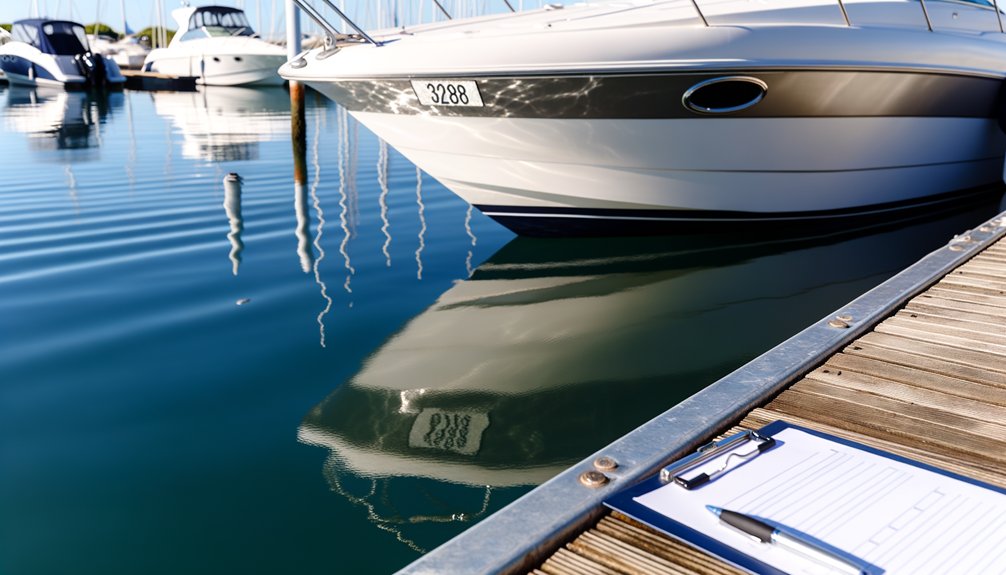
When it comes to boat ownership, understanding VIN verification is essential. Many states require a valid Hull Identification Number (HIN) for registration, ensuring compliance and confirming ownership. However, not all boats follow the same rules. Some older models or homemade vessels might be exempt. Discover the nuances of these regulations and how they affect your boat transaction. What’s the best course of action for your specific situation?
Understanding Hull Identification Numbers (HIN)
The Hull Identification Number (HIN) serves as a unique identifier for your boat, much like a VIN for cars. This 12-character alphanumeric code, typically found on the transom, allows for precise tracking and registration of your vessel. The HIN encodes critical information, including the manufacturer, model, and year of construction. Understanding your HIN is essential for verifying ownership and maintaining compliance with maritime regulations. Each character in the HIN provides specific data, enhancing traceability in cases of theft or damage. By familiarizing yourself with this important identifier, you’re not just adhering to best practices but also embracing a culture of accountability and innovation in the boating industry. Always keep your HIN accessible for inspections and documentation purposes.
State Regulations and VIN Verification Requirements
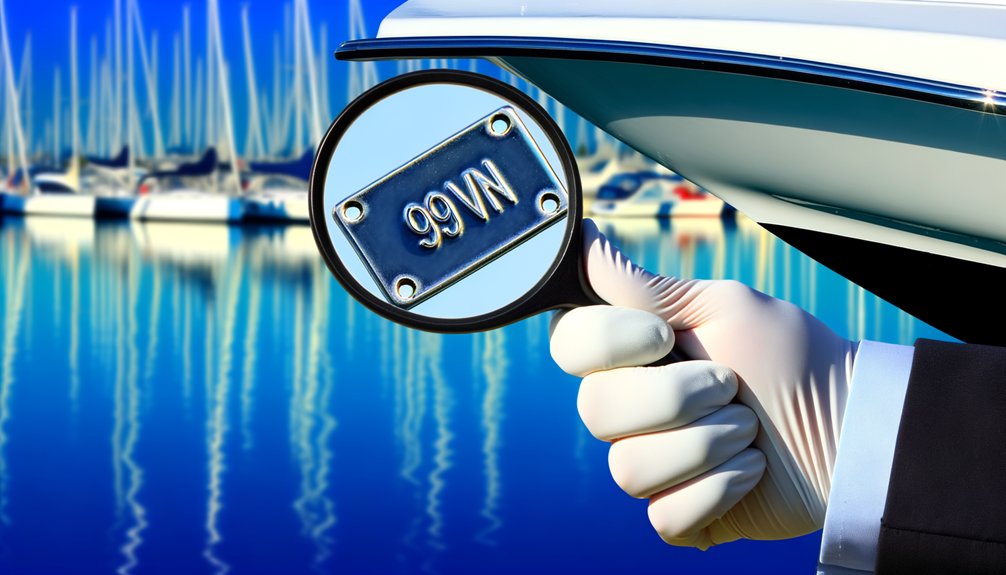
While each state has its own regulations regarding VIN verification for boats, most require that you provide proof of ownership and a valid HIN during the registration process. It’s critical to familiarize yourself with your state’s specific requirements, as they can differ considerably. Some states mandate VIN inspections conducted by authorized personnel, while others might only require documentation proving ownership. Be prepared to submit forms that detail the boat’s make, model, and year, alongside your identification. Additionally, keep in mind that some states may impose fees associated with verification. Staying informed about these regulations guarantees a smoother registration process and helps you remain compliant with local laws, ultimately enhancing your boating experience. In certain circumstances, VIN verification may also be essential for registering out-of-state boats.
The Importance of VIN Verification in Boat Transactions
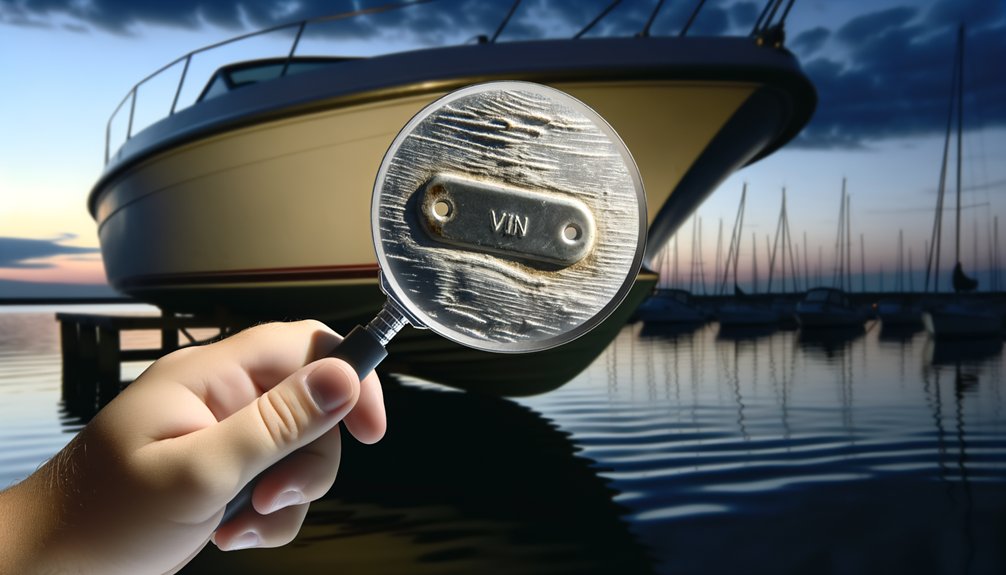
Ensuring VIN verification in boat transactions is essential for protecting both buyers and sellers. It confirms the boat’s identity, ensuring that the vessel you’re considering isn’t stolen or linked to previous liabilities. By verifying the VIN, you gain access to critical information, including ownership history and any past accidents or damages. This transparency fosters trust, enabling buyers to make informed decisions while allowing sellers to present a legitimate product. Additionally, accurate VIN verification can streamline the registration process, reducing potential legal complications down the line. Embracing this practice not only enhances the overall transaction experience but also aligns with innovative practices in the boating industry, promoting accountability and integrity in all dealings.
Exceptions to VIN Verification
Although VIN verification is essential in most boat transactions, certain exceptions exist where it may not be necessary. For instance, if you’re acquiring a boat that’s over a specific age, typically older than 20 years, some jurisdictions may waive VIN verification requirements. Additionally, if you’re purchasing a boat from a government agency or through a public auction, VIN verification might not be needed, as these entities often provide clear documentation of ownership. Moreover, when dealing with homemade or custom-built boats, you may encounter situations where the VIN isn’t applicable or has not been assigned. Always check your local regulations, as requirements can vary greatly, ensuring you’re compliant with your specific situation while pursuing innovation in your boating endeavors. In some cases, a temporary operating permit may also eliminate the need for VIN verification.
Steps to Verify a Boat’s HIN
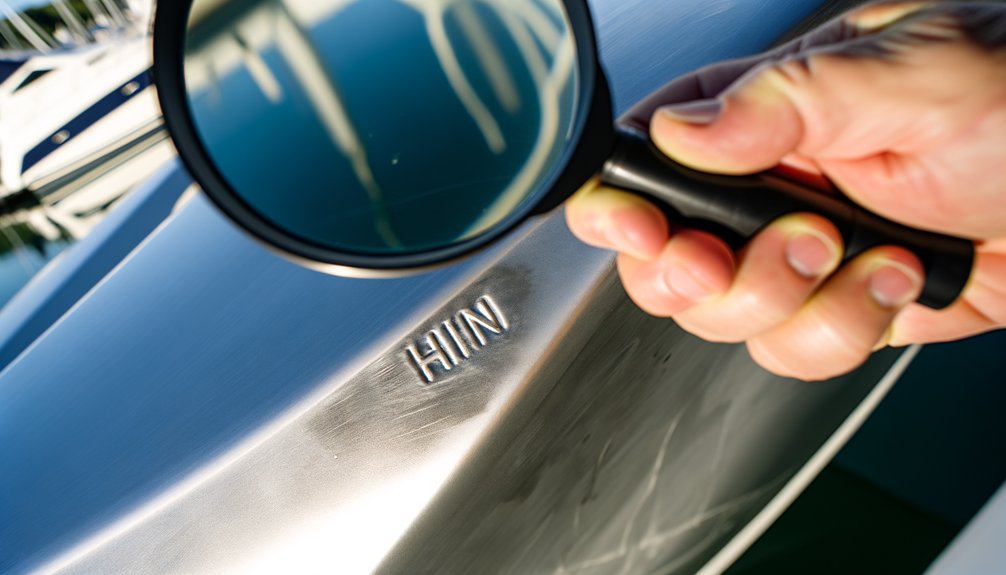
To verify a boat’s Hull Identification Number (HIN), you’ll first need to locate the number, which is typically found on the transom, near the stern, or on the starboard side. Once you’ve found the HIN, follow these steps to guarantee its validity:
- Cross-check the number against relevant documentation, like registration or title papers, for consistency.
- Inspect the HIN physically for any signs of tampering or alterations, guaranteeing all characters are intact and legible.
- Consult state or federal databases to confirm the HIN is registered and matches the boat’s specifications.
Additionally, it’s important to ensure compliance with VIN verification regulations to avoid any legal repercussions.
Taking these steps not only verifies the HIN but also protects your investment and guarantees compliance with regulatory requirements.
Frequently Asked Questions
Can I Verify a Boat’s VIN Online?
You can verify a boat’s VIN online through various state databases or registration services. These platforms often provide essential information, ensuring you access accurate and up-to-date details about the boat’s history and ownership.
What Happens if a Boat Has No HIN?
If a boat has no HIN, you can’t register it legally. You’ll face challenges proving ownership, which may hinder resale and insurance options. You should consider seeking guidance to obtain a valid identification number.
Are There Fees Associated With VIN Verification?
Yes, there’re typically fees associated with VIN verification. These fees can vary by state or agency, so you should check with your local authorities for specific costs and any additional requirements that may apply.
How Long Does the VIN Verification Process Take?
The VIN verification process typically takes a few hours to a few days, depending on your location and the specific requirements. You’ll need to gather necessary documentation to expedite the review and approval.
Can I Verify a Used Boat’s History?
Yes, you can verify a used boat’s history by accessing databases that track ownership, accidents, and maintenance records. Using the boat’s identification number, you’ll gain valuable insights into its past and potential issues.