How to Handle VIN Verification for Leased Vehicles
August 8, 2024
How to Resolve Discrepancies Found During VIN Verification
August 8, 2024
As you manage your fleet of commercial vehicles, you've likely encountered the necessity of VIN verification. This step isn't just a bureaucratic formality; it's a crucial safeguard. By verifying the Vehicle Identification Number, you're not only ensuring that each vehicle complies with legal standards, but you're also protecting your business from potential fraud and costly errors. Imagine discovering discrepancies that could affect your operations or, worse, your reputation. Now, consider what hidden issues might lurk in a vehicle's past that a simple VIN check could unveil. What risks might you be unknowingly taking on?
Understanding VIN Basics
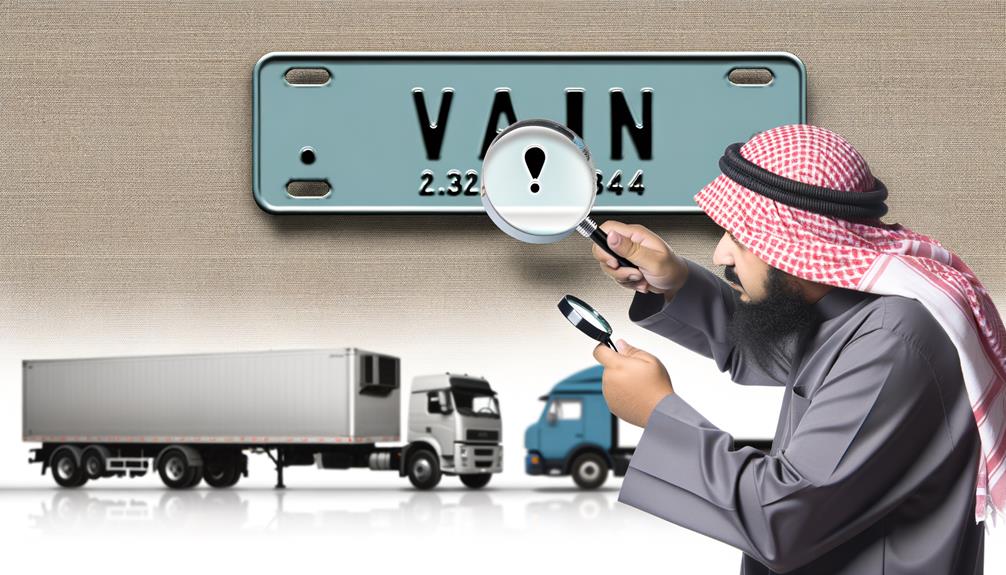
The Vehicle Identification Number (VIN) is your vehicle's unique 17-character code, acting as its fingerprint and containing essential information about its specifications and history. Comprising letters and numbers, each VIN is meticulously designed to avoid confusion with similar-looking characters. Since 1981, the U.S. Department of Transportation mandated this system not just for cars but also for commercial vehicles, ensuring every ride you own or consider buying is traceable and transparent.
Understanding the structure of the VIN can significantly empower you. The first three characters identify the manufacturer, crucial when you're dealing with commercial vehicles that might come from various global makers. Characters four through eight give you specific vehicle attributes—details like the engine size, model, and technology package. This becomes handy during VIN verifications, where you can ensure the vehicle matches its listed specs or discover discrepancies.
Positions nine through seventeen further hone in on the vehicle's identity, with a check digit for validation and data on model year and production sequence. Mastering this knowledge lets you navigate the market with confidence, ensuring you're never fooled by a mismatched or misrepresented vehicle. This level of detail supports your freedom to choose wisely and maintain control over your commercial investments.
Importance of VIN Verification
VIN verification frequently plays a critical role in ensuring your commercial vehicle meets legal and operational standards. By confirming that the vehicle identification number (VIN) matches official records, you're not just ticking a box; you're safeguarding your freedom to operate without legal hitches. Imagine the hassle of being sidelined because your paperwork doesn't align with the DMV database. VIN verification prevents such nightmares, ensuring a smooth sail in your business operations.
It's not only about compliance. This process protects you from falling prey to odometer fraud and vehicle theft, common pitfalls in the commercial vehicle market. Ensuring your vehicle's VIN is verified means you're not buying into a rigged game. You've got the real deal, and you know it's been checked thoroughly.
Moreover, understanding your vehicle's accident history through proper VIN verification can be a game-changer. It's about more than just knowing what you're driving; it's about ensuring the safety of every load and every trip. This knowledge allows you to manage maintenance proactively, rather than reacting to unexpected breakdowns.
After all, isn't the ultimate freedom in business the ability to operate with confidence, knowing your commercial vehicles are as reliable as they come?
VIN Verification Process
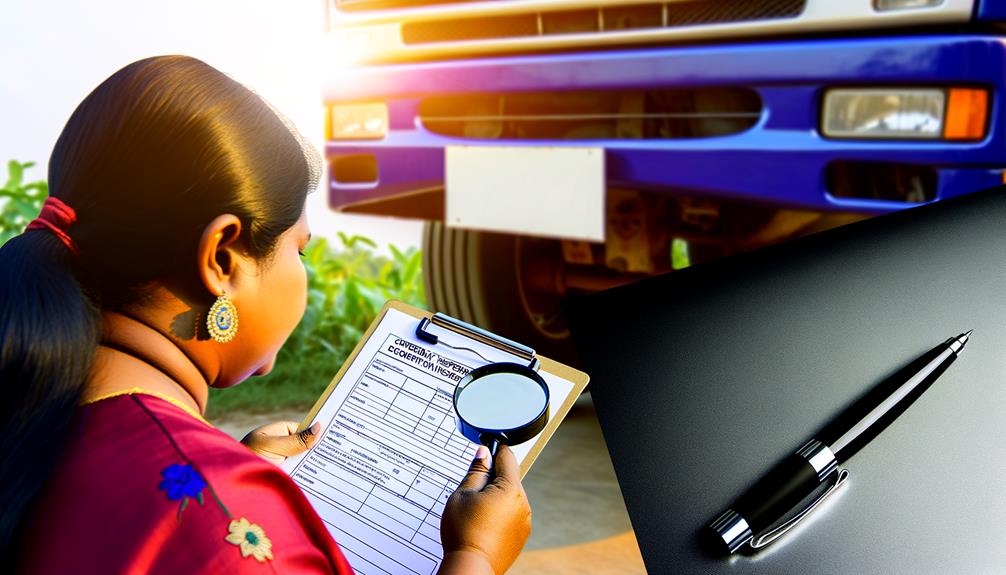
Understanding how VIN verification is conducted can equip you with the knowledge to ensure your commercial vehicle complies fully with legal requirements. VIN verification is more than a routine check; it's your first line of defense against potential legal and operational headaches.
This process involves a careful physical inspection by authorized vehicle verifiers who ensure the vehicle identification number (VIN) on your vehicle matches exactly with what's documented on your vehicle's title and registration.
During the inspection, verifiers look at the make, model, year, and odometer reading of your vehicle. They also check for the presence of specific labels that confirm your vehicle's compliance with state regulations. This isn't just about ticking boxes; it's about verifying the very identity of your vehicle to protect you from fraud and theft.
The findings from this inspection are documented on a REG31/VIN verifier form. This form is crucial as it serves as proof of verification for the DMV, ensuring that your vehicle's identity is validated and recorded correctly.
Regulatory Compliance Needs
You must ensure your commercial vehicle meets all regulatory compliance needs for VIN verification to avoid penalties and operational disruptions. Federal and state regulations demand accurate vehicle identification, and it's your responsibility to keep everything in check. This isn't just about maintaining legality; it's about preserving your freedom to operate without unnecessary government interference.
Remember, manufacturers send VINs to the National Highway Traffic Safety Administration to meet these compliance standards and ensure each vehicle can be traced. Don't overlook the fact that different states might have their own spin on the rules. For instance, California insists that the last eight digits of your VIN are visible from 50 feet away. Details like these aren't just nitpicking; they're central to staying on the road and out of trouble.
Adherence to regulations like those in Part 565.23, which specify VIN labeling requirements, is non-negotiable. These rules ensure that your commercial vehicles are recognized as up to standard in terms of identification and safety. If you slip up, you're not just looking at fines—think about the delays in registration and headaches during sales or transfers.
Play it smart; keep your VINs clear and compliant.
Commercial Vehicle Identification
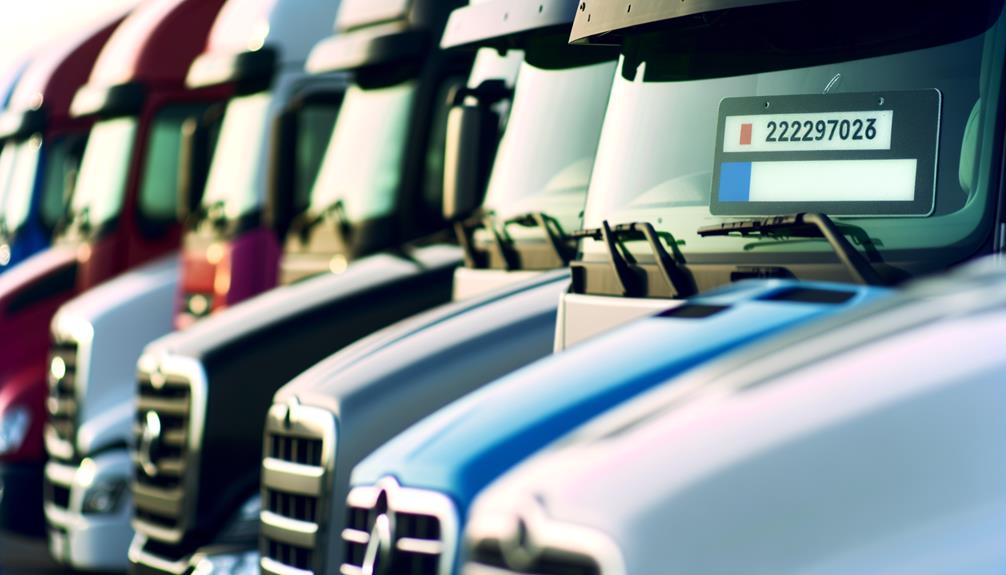
Every commercial vehicle carries a unique 17-character VIN that details its origin, model, and key specifications. This vehicle identification number (VIN) isn't just a string of random characters; it's your assurance that the vehicle meets all regulatory standards and is precisely what it claims to be.
Think of VIN verification as your key to freedom on the road—ensuring your commercial vehicles are legitimate and ready to tackle the work ahead without unforeseen legal hassles.
You'll find the VIN stamped on a non-removable part of your vehicle, a requirement that guarantees visibility and durability. This isn't just about meeting compliance—it's about having the peace of mind that your vehicle isn't masked under a fake identity, which is critical in preventing theft and fraud.
Each VIN reflects specific information crucial for your operations, including weight class and engine type, making it essential not just for compliance, but for operational efficiency.
Accurate VIN verification ensures that every commercial vehicle you operate adheres to stringent safety and regulatory standards. It's your ticket to ensuring that these vehicles are roadworthy and meet state and federal registration requirements, thus safeguarding your business's operational freedom.
VIN Check Benefits
Let's explore how VIN checks benefit your commercial vehicle purchases and fleet management.
When you're expanding your fleet, freedom comes from making informed choices. VIN verification plays a crucial role here, providing a clear picture of each vehicle's history. You'll know about past accidents and ownership changes, ensuring you're not buying into hidden problems but real value.
Imagine discovering discrepancies in odometer readings before it's too late. VIN checks safeguard you against fraud, revealing the true mileage of a vehicle. This not only protects your investment but also boosts your confidence in the deals you strike.
VIN verification also lets you check a vehicle's specifications and features, ensuring they meet your operational needs and comply with regulatory standards. It's all about having the right tools for the job without unnecessary setbacks.
Furthermore, uncovering a vehicle's salvage or junk status through VIN checks can be a dealbreaker. You'll steer clear of vehicles that could compromise your business's reliability and safety.
For those managing a large fleet, these checks are indispensable. They help maintain accurate records, enhance inventory management, and ensure you're always up to scratch with regulatory compliance. That's how you keep your business moving forward, unrestricted and secure.
Authorized VIN Verifiers
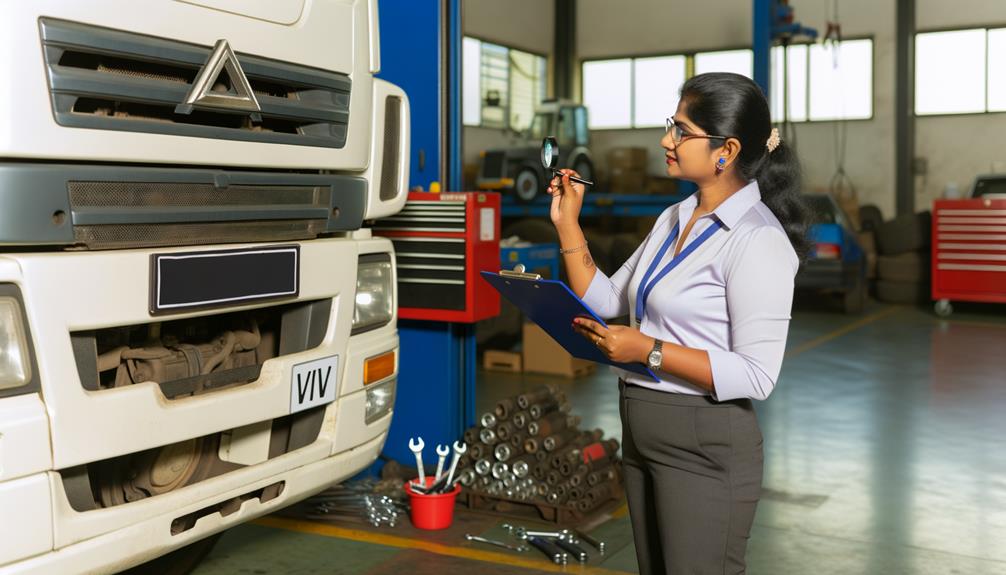
In California, authorized VIN verifiers like licensed verifiers, the California Highway Patrol (CHP), and qualified DMV personnel play a crucial role in ensuring the accuracy of vehicle information. They're your go-to experts to confirm that the vehicle identification number (VIN) on your commercial vehicle lines up perfectly with state records. This step is key to safeguarding against theft and fraud.
When you're running a business, time is money, and you can't afford to get bogged down in red tape. Opting for a licensed verifier, such as Redline Registration Services, can save you a heap of time. These pros offer a quick turnaround, freeing you from the long waits often seen at DMV offices.
Moreover, authorized VIN verifiers aren't just checking the VIN; they're thorough, inspecting emission labels, vehicle type, and odometer readings. This comprehensive approach ensures your commercial vehicle complies with all California VIN regulations, paving the way for a hassle-free registration.
Using an authorized verifier also adds a layer of legitimacy to your operations. You'll have the assurance that your commercial vehicle meets all legal thresholds, which is crucial for smooth and lawful business operations.
Operational Hours and Locations
You'll find Redline Registration Services conveniently located in Hayward and Oakland, with operational hours designed to accommodate your busy schedule.
Whether you're juggling work, errands, or personal commitments, their doors are open Monday through Friday from 10 AM to 6:30 PM, and Saturday from 10 AM to 3 PM. Need a VIN verification during a hectic week? No problem!
Over in Riverside County, Quick VIN Verification also understands your need for freedom and flexibility. They're ready to serve you Monday to Friday from 9 AM to 6 PM, and even on Saturdays from 10 AM to 3 PM.
Located at 5586 Mission Blvd Ste B, they're just a call or a drive away.
Both the Hayward and Oakland locations are equipped and ready to meet your needs as a vehicle verifier. You can reach the Hayward office at (510) 342-9216 and the Oakland office at (510) 957-5289.
If you need directions or additional information, they're more than happy to help guide you through the process.
Frequently Asked Questions
Why Is It Important to Check the Vin?
You'll want to check the VIN to uncover any hidden issues like past accidents, fraud, or recalls that could limit your freedom to use the vehicle as you see fit. It's about staying informed.
What Is the Purpose of VIN Vehicle Identification Number?
The purpose of a VIN is to uniquely identify your vehicle. It tracks your car's history, ensuring you're informed about past accidents, ownership, and authenticity—all crucial for your freedom to make informed choices.
Is VIN Verification Required in California?
Yes, in California, you're required to get VIN verification for out-of-state vehicles, including commercial ones, to confirm their identities and ensure they comply with state registration laws. It's essential for maintaining vehicle integrity.
Why Is It Important to Have the VIN of the Vehicle You Are Working On?
You need the vehicle's VIN to track its history, ensure compliance with regulations, and verify accuracy in records and mileage. It protects you from fraud and confirms the vehicle meets operational standards.